


All About Old Toys













LET’S GO FLYING!
Article by
Dave Pecota
|
I’m sure almost all of you played with balsa wood gliders at some time in
your youth, just as I did.
Whether it was a toy that your mom or dad bought you for “being good” … a
party favor … or something you spent your allowance on in order to have
some fun with friends on sunny, summer’s day. |
|
We just opened the packages … slid the wings and tails
into the slots … and we were ready to go flying.
Few of us even bothered to read the assembly instructions.
We all knew what airplanes looked like.
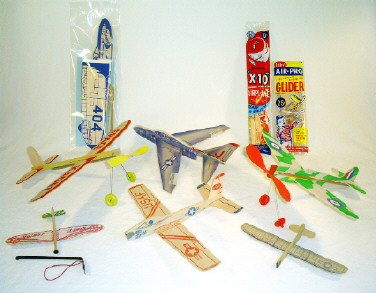
Some of the gliders, we merely tossed into the air. Some we shot skyward with rubber band catapults. Others had rubber-band “motors” that we wound furiously and released to fly off under their own power. (If they were rubber-powered AND had an "undercarriage" ... wheels & struts ... they took on the moniker "ROG" because they could actually "Rise Off the Ground".) Many youngsters loved to fly toy airplanes, but … like me … lacked the building skills necessary to assemble those marvelously complicated balsa wood stick & tissue kits. So these “ready-to-fly” (RTF) balsa wood toys provided an easy way for us to enter the realm of flight. We soon discovered that we could alter the way the gliders flew by moving the wings forward and back … or by adding weight to the nose … or by changing the shape of the wings and tail with a piece of sandpaper … or even by winding more and more knots into the rubber-band motors. Unknowingly, we were actually learning about the basics of flight in almost the same way Wilber & Orville Wright did ... experimentation. (As the legend goes, it was the gift of a rubber-band powered helicopter toy that first piqued the Wright’s interest in flying.) Many, many times, our best flights ended with the airplanes landing on a neighbor’s rooftop, or in a tree or disappearing totally from sight. But a quick trip to the store could easily replenish our “air force”. They seemed to be available everywhere, with lots of company choices. There were company names like American Junior, North Pacific, Guillow, Comet, Testors, Champion and Top Flite. And many others I can’t remember.
|
|
Fond memories indeed. And for me, the start of what turned out to be a 35 year career in aviation. Although hand-made airplane-like (or bird-like) flying toys appeared in the 1800’s, it’s unclear exactly when company-made RTF toy airplanes first became available. Some model airplane kits reportedly appeared as early as 1910. 1911 issues of “Aircraft” magazine (about “real” airplanes) had numerous ads from several manufacturers for model airplanes in kit and RTF form. Most of these were expensive to buy. In a time when $20-25 per week was a really good, working-class salary, the Ideal Model Aeroplane Co. (which became the Ideal Toy Co.) advertised airplane kits for $4-6. RTF versions sold for as much as $20. Most of the Ideal RTF airplanes were “factory built” examples of their kit aircraft. From 1914-20, Ideal offered wood and fiber board RTF gliders for 45 cents. Though not inexpensive by any means, these can probably be considered some of the fore-runners of our “toy” airplanes. In the 1920’s and 30’s, balsa wood became more readily available and the number of simple RTF toy gliders increased. Certainly the Charles Lindbergh phenomenon also boosted sales of toy and model airplanes of all types. However, most were still only available from hobby shops, finer toy stores or through mail order. Many of the companies that would become household names in the toy and model airplane world … American Junior Aircraft Co., the Paul K Guillow Co., the Cleveland Model & Supply Co., the Testor Corporation and Comet Model Airplane & Supply Co. … all had their beginnings in this period. During World War 2, balsa wood was considered to be a
“strategic material”, so toy airplane production was reduced dramatically.
However, American Junior Aircraft founder Jim Walker cleverly developed a launching
platform for his folding wing balsa gliders.
This provided the Army with a quick and effective system for gunnery
practice. As a result,
American Junior Aircraft
received significant supplies of balsa and over 120,000 Walker gliders
met their doom for the war effort.
After the war, balsa once again became plentiful. As the post-war economy … and family “production” … boomed, dozens of companies now competed in the toy airplane market. The number and variety of toy airplanes was truly dazzling. New and important entrants into the RTF glider market included North Pacific Products, Pactra Chemical Co. and Top Flite. For many of us, great airplane names like Hornet, Interceptor, Super Ace, Super Saber, Space Kadet, Ceiling Walker, Skeeter and Sleek Streek became integral parts of our everyday vocabulary.
|
|
In 1953, the Paul K.Guillow Co. introduced the Jetfire glider, which was the first of its type to be mass-produced and packaged in high-speed machinery. This allowed Guillow to meet the production quantity and unit price demands of the now-flourishing “chain stores”. The mass-marketing success of Guillow and a slowing economy spelled the end for many of the smaller companies in the 1950’s and 60’s. Some, like American Junior Aircraft, North Pacific and Comet disappeared into larger companies. Others just disappeared. By the 1970’s, only a few players were left in the game. Currently, Guillow is the dominant manufacturer of wooden toy gliders in the US. This is understandable in my view, since they are the most akin to the gliders of the distant past. Kids can fly ‘em right out of the package … or learn the intricacies of modification and trimming for increased performance. Several other companies produce flying toy airplanes using plastic and foam, but their flight performance and durability are … to put it kindly … disappointing. Likewise, contemporary laser-cut wood gliders from Asia also seem to “miss the mark” on quality and “fly-ability” in my view. In this era of internet auctions and antique malls, vintage gliders can often be found if one is persistent. However, many gliders are now finding their way into collections verses being used as “toys” for a weekend’s flying fun … so prices are rising accordingly.
|
|
“Let’s Go Flying … the Next Chapter”
Using today’s popular jargon, “it’s been a minute”
since the webmaster here first posted my toy articles on this website.
(Thanks Jim!) Time has
flown … more than a decade.
In that time, I have received many messages and inquiries about my wood
toys … particularly the gliders … from all over the world.
According to a letter I received from the Smithsonian’s National
Air & Space Museum several years ago, this website has become a primary
source of RTF (ready-to-fly) glider reference material for the museum.
While collecting and researching gliders, I tried
to “leave no stone unturned” in finding noteworthy items and significant
historical data. Strangely,
after the initial posting of the glider article (and a subsequent format
revision), I found very few gliders or new information that could
significantly advance the story, despite diligent and time-consuming
research. Was there nothing more
to discover? Reluctantly I moved
on to other collecting and research challenges, while still occasionally
reconnecting to the toy airplane/glider hobby.
During the dark times of the pandemic, my daughter
became enamored with plane-spotting through several global live streaming
channels. Later, we enjoyed
several plane-spotting adventures of our own, and attended airline
memorabilia shows and expositions in Cleveland, Dallas and Atlanta.
Our souvenirs include airplane models, aviation
signs and even a demonstration seat belt (shown here, ca 1960’s) used on
countless past Delta Airlines flights and became “surplus to needs” more
than 20 years We also visited numerous aviation museums.
At the museum located at Dallas
Love Field, we saw a large group of children getting a guided tour.
Upon the tour’s completion, they were all given balsa gliders and
collectively flew them across the museum floor.
It was an awesome sight to see so many gliders in flight all at
once … and so many smiling faces.
In recent months I’ve been communicating with
several glider collectors who are actively pursuing their own collecting
journeys. It has been a
delight to assist them as best I could.
To a limited extent, my own wood glider journey took wing once
again. During this short interlude from my other pursuits
… as if through intervention by vintage glider spirits …. I came across
some additional “unturned stones” that shed new light on early 1950’s
production by the American Junior Aircraft Company.
In one case, a mystery was solved about a particular AJ glider that
has perplexed me (and other collectors) for years. The Ten Cent 74 (AJ) The first new discovery was a group of unusual AJ
“74” gliders packaged in plain brown wrappers.
A price of 10 cents was printed on each wing-tip.
I have personally never seen price data printed directly onto an AJ
glider. 10 cents had been the
target retail price for these gliders for many years, but it was usually
printed on packages, store displays, advertisements and in catalogs.
When these gliders arrived after my online
purchase, I was stunned.
Aside from the wingtip price printing, the wingspan of these gliders had
been reduced to 11 inches from the standard 74 wingspan of just over 12
inches. So, starting with the
same length of sheet balsa wood, you could likely make 11 wings instead of
just It is well known that in the early 1950’s, company
owner Jim Walker was under a great deal of pressure from investors to
reduce production costs to better compete with similar gliders from
Testors, Guillow and particularly North Pacific.
Reportedly, Walker was reluctant to completely redesign his beloved
74 or to increase its retail price above 10 cents. One could theorize the revisions found on these
small-wing gliders were attempts to lower manufacturing costs, while still
retaining the glider’s original design.
I have not seen AJ advertising or heard anecdotal evidence to
indicate these gliders actually achieved public sale.
Perhaps they were “salesman’s
samples” for demonstration purposes. Shortly after Walker’s passing in 1958, a
completely redesigned and lower production cost 74 (the 2nd
generation version shown elsewhere on this website) replaced the original
design.
The Hallicrafters Glider (AJ) A second recent discovery provided the solution to
a mystery regarding a strange variation of the AJ 74.
I recently purchased a mixed group of gliders that
included items from both Jim Walker’s original American Junior company and
Frank Macy’s “reborn” company American Junior Classics.
In that grouping The 2 civil/military hybrid 74s were likely the
result of mating extra Hallicrafters civil-printed fuselages with 74
military-printed wing and tail components, to make complete and flyable
gliders. The mystery now is …
who did this and when was it done.
Reportedly, both these hybrids came from Frank Macy’s personal
collection. Early in the
history of his new company, Macy possessed an inventory of spare parts
from the previous company.
Cleverly, he combined surviving original components I have no records to indicate that AJ made
promotional RTF gliders prior to 1960.
However, Walker had been flying radio-controlled model airplanes by
the late 1930’s, and won the US national championship for R-C airplanes in
1940. Newspaper articles from that
period indicated he was also a “ham radio” operator.
At some model airplane meets where Walker competed, airmeet staff
used automobiles equipped with short-wave radios to chase and retrieve
wayward model airplanes.
Hallicrafters was famously known for producing this type of radio
equipment. As shown in the
ad, Hallicrafters also By matching the glider’s wing print style and the
company’s use of the word “precision” prominently in their advertising
from 1948-51, we can reasonably date the glider to that period.
However, this may be the only complete Hallicrafters glider of this
type that survives to this day.
Therefore, it is unclear whether a significant production run was
completed, or if the glider should be more correctly classified as a
“prototype”. Continuing the Journey? Admittedly, I get a great deal of satisfaction
from sharing toy history information with others.
I find this to be much more gratifying than merely adding new items
to a personal collection. So,
I will be taking this recent experience as a sign that in fact, there is
more to learn … more stones to unturn. If
anyone has additional information about either of the gliders highlighted
in this story or those shown elsewhere on this website, please message me
through the contact information posted on this website.
Likewise, if you know of vintage glider(s) that deserve some
attention, let us know.
And as a quick reminder … regardless of your age …
take every opportunity to step outside and do something fun.
Let’s go flying … again!
|
|
Author’s note – This article is provided for the entertainment of readers. To my knowledge, no definitive book(s) on the subject currently exist. However, the information was sourced as much as possible from original catalogs and ads, period newspaper articles and first-hand data from company representatives. The opinions expressed are not necessarily endorsed by the website management. I welcome any comments, questions or corrections. David C “Dave” Pecota |
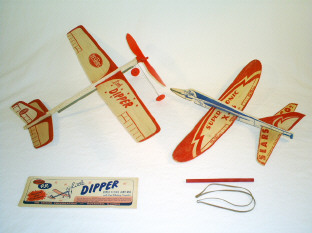 Assembly was simple and easy … almost intuitive.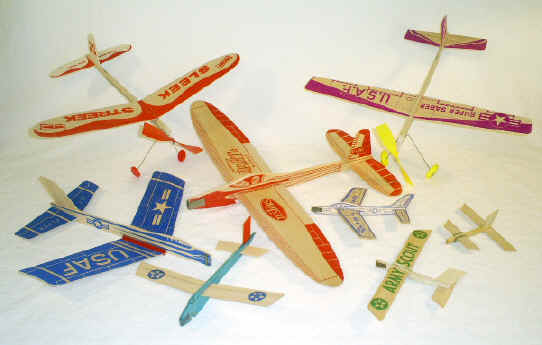
 ago.
ago.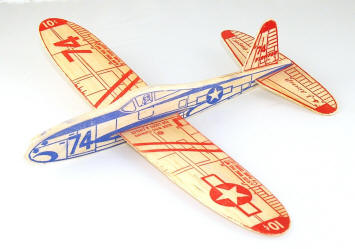
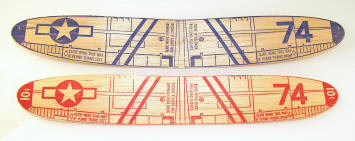 10 of the standard size. The wings had a narrower wing chord as well,
resulting in a measurable reduction in wing area (as shown in the included
photo).
10 of the standard size. The wings had a narrower wing chord as well,
resulting in a measurable reduction in wing area (as shown in the included
photo). .JPG)
.JPG)
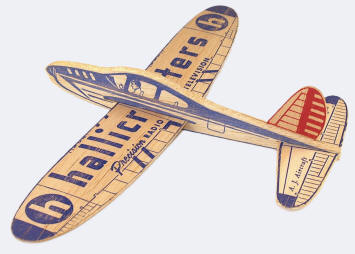 was a glider with the mysterious civilian-printed fuselage.
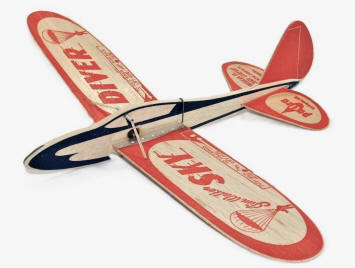 with his own newly-made parts to make dozens of flyable gliders.
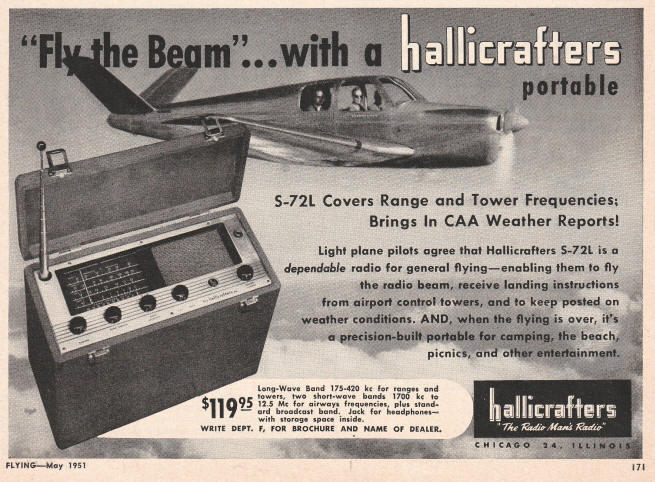 manufactured equipment for use in civilian aircraft.